
Biomass Pellets Supplier for Bulk Buyers and Export Orders
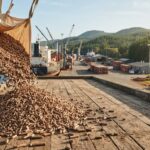
U.S. exports of densified biomass fuel reached 0.88 million tons in July 2026, according to the U.S. Energy Information Administration. To contact a biomass pellets supplier, use the company’s official sales or inquiry channel. Include the pellet type, required volume, destination, packaging needs, and preferred delivery terms in your request.
Comparing biomass pellets suppliers takes more than checking the quoted price. Product type, order volume, export arrangements, and intended fuel use all affect whether an offer is suitable. Learn how to find supplier contact details, compare bulk quotations and export options, and match pellet types to industrial or domestic applications. Preparing the right information also makes your supply inquiry clearer and more useful.
Key Takeaways
- Make supplier inquiries more useful by stating the pellet type, order volume, destination, and delivery requirements.
- Compare bulk quotations by considering product specifications, packaging, and shipment arrangements, not price alone.
- Match pellet type to its intended application, from domestic heating to industrial thermal energy.
- Review export options alongside the product and destination to assess the full order requirements.
Need High-Quality Biomass Pellet Daily?
Reliable pellet supply depends on consistent feedstock, appropriate processing, and clear delivery terms. Before placing repeat orders, compare production capacity, material sources, and handling requirements.
Supply and Market Considerations
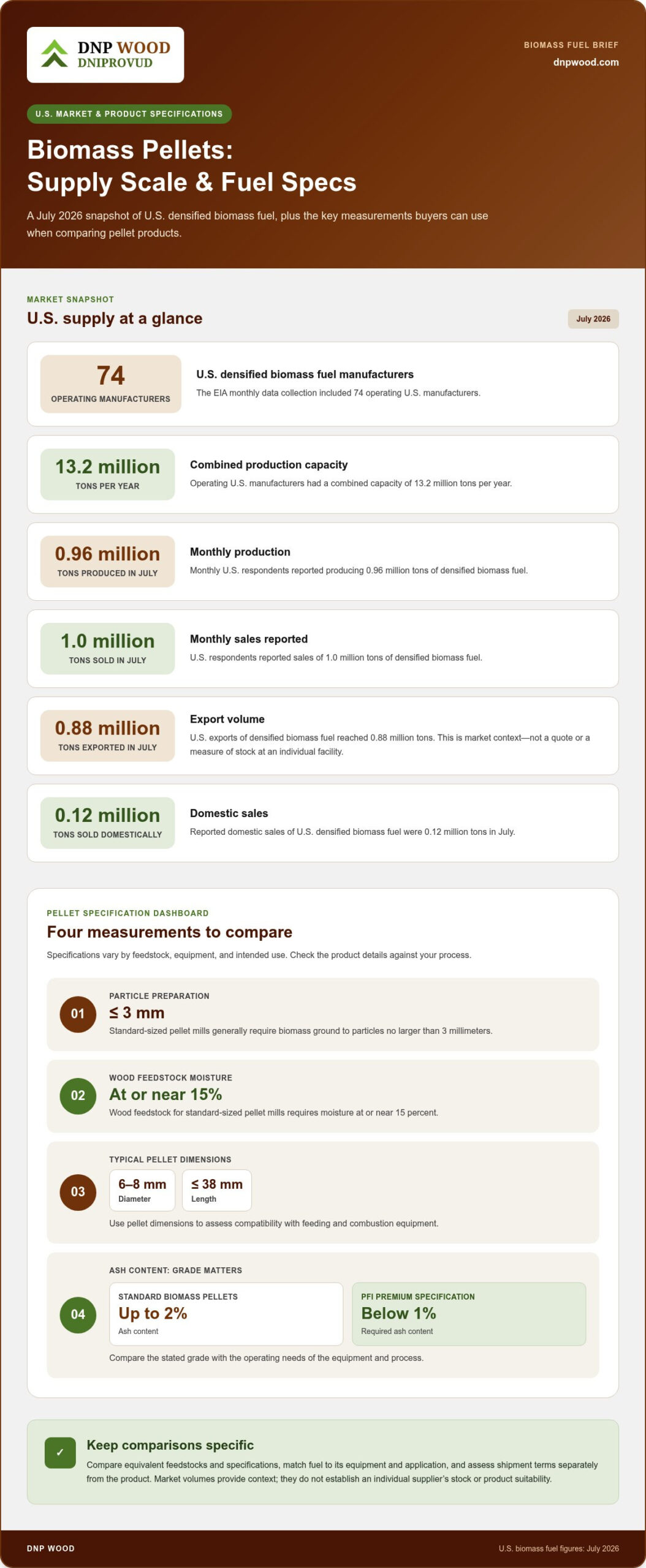
Feedstock availability affects manufacturing continuity and the final quotation. Agricultural waste, including sunflower husks, can serve as pellet feedstock alongside wood; buyers should compare source consistency, seasonal access, and transport distance. These factors shape supply risk and delivered cost. In July 2026, the EIA monthly data collection included 74 operating U.S. manufacturers of densified biomass fuel, according to the U.S. Energy Information Administration. Operating U.S. densified biomass fuel manufacturers had a combined production capacity of 13.2 million tons per year as of July 2026, according to the U.S. Energy Information Administration. In July 2026, monthly U.S. respondents produced 0.96 million tons of densified biomass fuel, according to the U.S. Energy Information Administration. To evaluate a supplier’s quality, reliability, and sustainability, compare material-source transparency, product consistency, production capacity, and the clarity of its supply information.
Pellet Types from U.S. Suppliers
U.S. suppliers offer wood pellets and agricultural-residue options, including sunflower husk and alfalfa hay pellets. Match the feedstock to the intended biomass fuel application and the equipment using it. Pellet production also depends on preparation: standard-sized pellet mills generally require biomass ground to particles no larger than 3 millimeters, while wood feedstock requires moisture at or near 15 percent. Ask for product specifications relevant to your process, including feedstock and handling characteristics. A clear specification makes comparisons between sources more useful than relying on the generic label “biomass pellets.”
Delivery Options and Order Minimums
Suppliers may offer packaged lots or bulk shipments. Minimum order quantities depend on packaging, shipment size, and destination. When requesting terms, state your required volume, delivery location, and preferred format. Choose an option that suits your storage capacity and fuel consumption. Keep pellets dry, covered, and away from contaminants, since moisture can damage the material. Plan storage and unloading before delivery, and use handling procedures that limit dust and breakage. These steps help preserve product quality and reduce avoidable losses.
Industrial and domestic fuel applications
Pellet fuel serves household heating and larger commercial or industrial energy needs. The application determines which fuel properties matter most, from ash content to pellet dimensions.
Industrial Fuel Uses
Utility-grade wood pellets provide thermal energy for industrial processes, including electricity generation. Commercial buildings may also use densified biomass fuel in large boilers, while residential wood pellet stoves and furnaces are used for domestic heating. Choose fuel to suit the equipment and process, not just the feedstock name. Industrial buyers should compare consistent product specifications and confirm that the fuel suits their operating requirements. Biomass fuel can support renewable energy use, but its practical fit depends on the application and the system.
Pellet Size and Fuel Properties
Biomass fuel pellets are typically cylindrical, measuring 6 to 8 millimeters in diameter and no more than 38 millimeters long. These dimensions help buyers assess compatibility with feeding and combustion equipment. Fuel properties also vary: standard biomass pellets may have ash content of up to 2 percent, while the Pellet Fuels Institute’s premium pellet specification requires ash content below 1 percent. Compare the stated specification with the equipment’s operating needs. For a wood pellet, confirm the relevant product standard and fuel characteristics before selecting it for heating or industrial use.
For U.S. buyers, PFI-certified wood pellets meet standards set by the Pellet Fuel Institute and are regulated through third-party inspections. The premium specification provides a useful quality benchmark, but buyers should match the grade to the intended application. In July 2026, monthly U.S. respondents sold 1.0 million tons of densified biomass fuel, according to the U.S. Energy Information Administration. Domestic sales of U.S. densified biomass fuel were 0.12 million tons in July 2026. Compare the domestic sales context with your own order requirements, rather than treating market volume as a measure of product suitability. For product comparisons, review the available wood pellet options alongside other fuel types.
Biomass pellet exports and prices
U.S. exports of densified biomass fuel were 0.88 million tons in July 2026, according to the U.S. Energy Information Administration. That figure provides market context, not a quotation or a measure of stock at an individual facility. Export prices depend on the product, shipment terms, origin, destination, and logistics. Compare offers using the same volume and delivery basis, so differences in freight or packaging don’t obscure the product comparison.
Request an itemized quotation from each biomass pellets supplier. Separate the pellet price from transport, loading, packaging, and any other stated shipment charges. Compare products with equivalent feedstocks and specifications. Wood pellets and agricultural-residue pellets are different products, so a lower quoted amount alone does not mean better value. Ask suppliers to state the quote’s validity, currency, delivery point, and included services in writing.
- Product: Record feedstock, pellet form, and the specification used for the quotation.
- Volume: Request pricing for the same order quantity from each source.
- Shipment: Separate inland transport, port handling, and ocean freight where applicable.
- Delivery basis: Compare the same destination and responsibility for transport costs.
For an export order, map the route before comparing totals. Identify the loading location, destination, packaging format, and receiving facility. These details affect transport planning and delivered cost. Check what each quotation includes, then calculate the landed total by adding the listed product and shipment charges. Keep assumptions consistent across offers: a quote that excludes freight may look cheaper than one that includes delivery.
Renewable energy buyers may also assess feedstock origin and carbon accounting. Such claims depend on the boundaries and assumptions used, so compare the stated method rather than treating “renewable” as a quantified carbon benefit. For example, review production and transport emissions separately when assessing an export proposal. Record the product, route, shipment charges, and environmental accounting basis together. This gives procurement teams a practical way to compare export offers without confusing market-wide volumes with the terms for a specific facility.
What types of biomass pellets are available from U.S. suppliers?
U.S. suppliers classify biomass pellets mainly by feedstock and intended use. Common categories include wood pellets, sawdust pellets, and pellets made from agricultural residues. These materials differ in composition, handling, and suitability for heating or industrial fuel systems. First identify which raw materials your equipment can use, then compare specifications for that feedstock across supplier quotations.
Feedstock names alone don’t describe finished-fuel quality. Sawdust pellets, for example, have reported bulk density of 606 kg/m3, energy content of 20.1 MJ kg-1, and ash content of 0.45 percent. Those figures describe the reported sawdust-pellet example, not every product in that category. Ask for the specification tied to the actual product and compare the same measures across offers. This keeps an agricultural-residue pellet from being compared as though it were identical to a wood-based fuel.
Grade provides another useful distinction. PFI-certified wood pellets meet standards set by the Pellet Fuel Institute and are regulated through third-party inspections. The designation can help buyers identify wood pellets assessed against that standard. Compare the certification claim with the product’s stated grade and intended use. Pellet form also matters: biomass pellets more than 25 millimeters in diameter are usually called briquettes, so check the product format before matching it to storage and feeding equipment.
- Feedstock: Record whether the product uses wood, sawdust, or agricultural residues.
- Grade: Compare stated specifications and applicable certification claims.
- Format: Distinguish pellets from larger briquettes before ordering.
- Application: Match product details to the fuel system and operating purpose.
Use those four points to prepare a comparable product request. Include the feedstock category, intended application, required format, and relevant quality criteria. A bulk pellet inquiry can then focus on the product type and order needs.
DNP Wood: Sunflower Husk Pellet
DNP Wood offers Sunflower Husk Pellet for buyers sourcing agricultural-residue fuel. Wood Pellet and Alfalfa Hay Pellets give buyers additional feedstock options to compare with their intended use. Choose the product type first, then include your required volume, destination, and delivery preferences in your inquiry. This gives the supply discussion a clear starting point without treating different feedstocks as interchangeable. DNP Wood also offers Wood Lumber for buyers seeking a solid-wood product alongside biomass materials. Contact DNP Wood to discuss your Sunflower Husk Pellet or other product requirements.
Set Up Your Next Supply Inquiry
Prepare a procurement brief before requesting a quote. Define the intended use, acceptable feedstock, required volume, delivery destination, and receiving arrangements. A biomass pellets supplier can respond more effectively when you distinguish essential requirements from preferences. For export orders, include the destination and requested shipment terms so the quotation can account for the route.
DNP Wood offers Sunflower Husk Pellet, Wood Pellet, and Alfalfa Hay Pellets. Use these product categories to identify a suitable starting point, then outline the order details that matter to your operation. A clear inquiry keeps the discussion focused on product selection and supply requirements, without assuming different pellet types are interchangeable.
Contact DNP Wood about biomass pellets to discuss your requirements. Prepare your product preference and delivery details, and take the next step with a clear procurement request.
Frequently Asked Questions
How do I get contact information for these companies?
Visit the company’s official website and look for its sales, contact, or product inquiry channel. Search the exact business name with terms such as “pellet sales” or “bulk orders” to find the right department. In your first message, include the product type, order volume, delivery destination, and intended use. A complete inquiry helps direct your request to the appropriate sales contact.
Where can I find biomass pellet suppliers near me in the United States?
Search by state or ZIP code alongside the specific feedstock, such as wood or agricultural-residue pellets. Compare delivery coverage to your receiving location, not just the supplier’s address. A producer farther away may still serve your area, depending on transport arrangements. Before requesting a quote, note your delivery access, unloading setup, and preferred shipment format.
Which U.S. suppliers offer bulk biomass pellets for industrial use?
Use the U.S. Energy Information Administration’s manufacturer data to identify U.S. producers of densified biomass fuel, then contact them through their official sales channels. Specify the relevant industrial process, such as boiler heat or electricity generation. Ask whether the product’s feedstock and stated fuel properties suit your equipment. Confirm bulk order and delivery terms directly with each supplier.
What are the prices per ton for biomass pellets in the United States?
There is no single price per ton for U.S. biomass pellet orders. Quotations vary by feedstock, product specification, order volume, packaging, freight, and delivery destination. Compare offers on the same basis by identifying what each quoted amount includes and whether transport is separate. For a meaningful cost comparison, also consider the fuel’s stated energy value and how much your operation can use.
How do wood, agricultural, and other biomass pellets compare in heating value and cost?
Compare each product’s stated heating value and delivered cost using the same units and shipment terms. Feedstock category alone does not show how much usable heat a pellet provides. For example, calculate cost per unit of stated energy by dividing the delivered price by the energy value for the corresponding quantity. Also consider whether the fuel’s properties suit your equipment and operating process.
What questions should I ask before choosing a biomass pellet supplier?
Ask which feedstock the product uses, what specifications describe the delivered fuel, and which documents accompany the order. Clarify the quotation’s validity, packaging, delivery responsibilities, and how order changes are handled. For recurring supply, ask how the supplier communicates product or shipment changes. Share your equipment requirements and receiving constraints so the response addresses practical fit, not just product category.
Posted in Uncategorized Tagged biomass exports, biomass pellets, bulk fuel supply, domestic heating, industrial fuel, pellet specifications, wood pellets Add new comment