
Biomass Pellet Fuel Comparison: Costs and Boiler Use

The lowest-priced fuel is not automatically the cheapest to run. A biomass pellet fuel comparison should consider usable heat, fuel consumption, transport costs, and supply stability. Wood briquettes can be cost-effective in wood-burning stoves, but they are not suitable for wood-pellet heating systems.
Fuel type also affects combustion and boiler operation. Wood pellets generally provide more heat than straw pellets, while agricultural pellets may suit larger systems designed to use a wider range of fuels. Compatibility matters: a fuel that burns well in one system may not perform the same way in another.
This comparison looks at wood fuels, straw, and other biomass pellets in terms of cost, sustainability, heat output, and operating demands. It explains how biomass sourcing affects climate impact, which fuel characteristics influence combustion, and how consumption, transport, and supply stability shape running costs. Use these factors to assess which option suits your equipment and fuel requirements.
Key Takeaways
- Compare fuel by usable heat and total operating costs, not purchase price alone; transport and supply stability also affect the calculation.
- Biomass sustainability depends on how the material is sourced and whether it can be replenished through responsible management or regrowth.
- Straw pellets can suit large-scale heating, but their lower heat output and combustion efficiency can affect fuel consumption.
- Match pellet type to boiler design: equipment made for low-ash wood pellets may not suit agricultural fuels.
Renewable biomass and sustainability
Biomass can be replenished, but sustainability depends on its source and how that material is managed. In the United States, biomass accounted for about 5% of total primary energy consumption in 2025, according to the U.S. Energy Information Administration.
Biomass Fuel Availability and Renewability
Biomass fuel availability depends on local supplies of wood, crops, and processing residues. Wood pellets can be made from wood-processing material, while straw pellets use crop stalks such as wheat or corn stalks. These sources link fuel supply to forestry and agriculture. For buyers, the source matters because harvest seasons, processing capacity, transport, and competing uses all affect whether a fuel is practical to obtain consistently.
Renewable means biological material can regrow or be replenished. Crop growth, woodland management, and replanting can support renewed supplies when harvesting is sustainable. Wood fuel may come from forestry, arboricultural work, or wood processing; agricultural residues come from crop harvesting or processing. Start by identifying the feedstock, then consider how it is produced and transported to the boiler.
Emissions from Wood and Agricultural Pellets
Wood and agricultural pellets release carbon dioxide when burned, returning some of the carbon absorbed during plant growth. Their environmental impact also depends on sourcing: sustainably managed crops or woodland can replenish biomass, but combustion still creates local pollution and solid residues. This is the emissions trade-off, not an absence of emissions.
Biomass-pellet solid emissions are listed at 0.4% to 7.0% of total weight. Feedstock and combustion conditions affect the residue produced, so the figure is a range, not a single result for every pellet. For a practical comparison, identify the pellet material and consider the equipment’s ash handling and operating needs.
The U.S. Renewable Fuel Standard
The U.S. Renewable Fuel Standard was established in 2005 by the Energy Policy Act, according to U.S. Congress. The standard is part of the U.S. policy context for renewable fuels, but it does not by itself establish that a particular pellet is sustainably sourced. Fuel buyers still need to distinguish a policy framework from the origin and management of the biomass they use.
For a sustainability review, trace the material from its source through to combustion. Wood residues, crop stalks, and purpose-grown energy crops have different production pathways. Compare those pathways alongside transport and boiler performance. This keeps the assessment grounded in feedstock, replenishment, and emissions, rather than treating every renewable pellet as environmentally identical.
Straw pellet costs and combustion performance
Straw pellets can be a lower-cost fuel for large-scale heating and power generation. Their heat output, equipment compatibility, transport costs, and supply stability all affect their operating value.
Calorific Value and Combustion
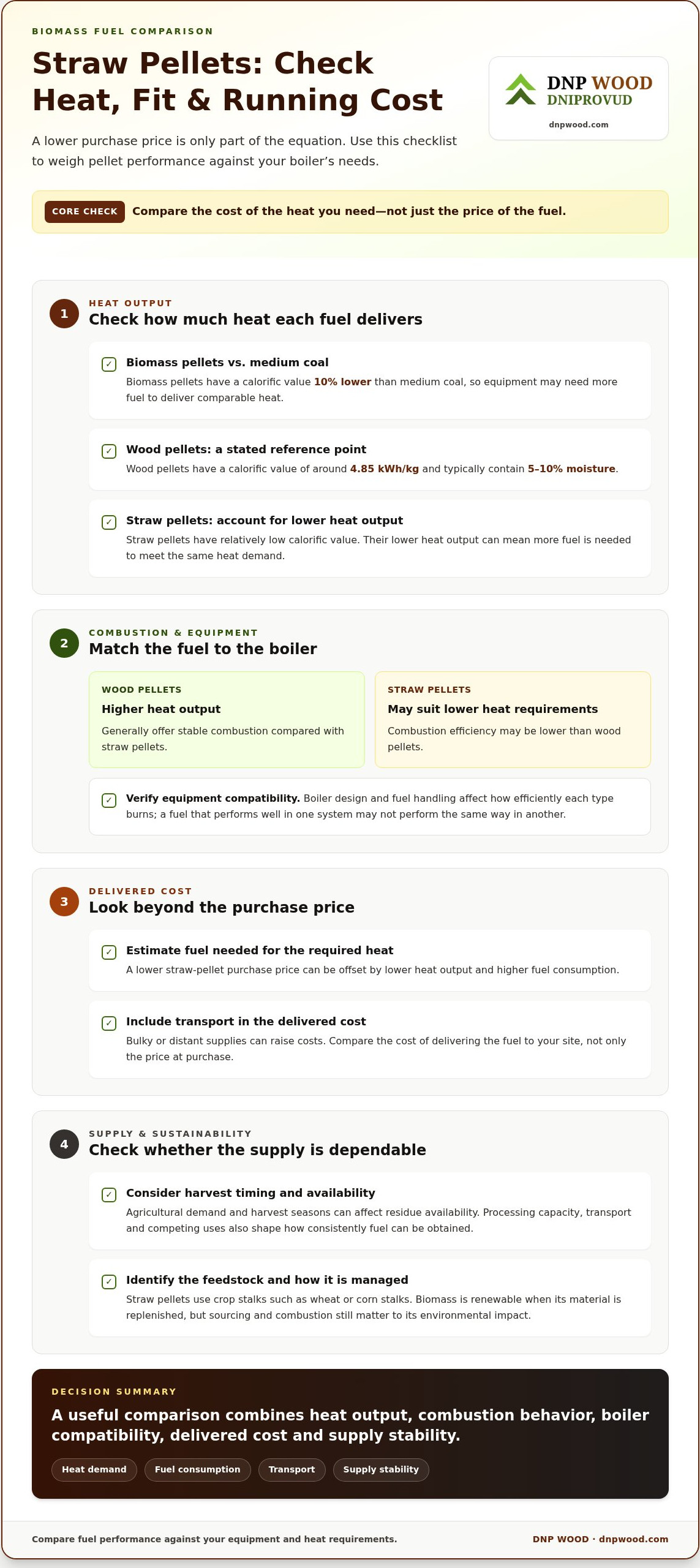
Calorific value measures the heat released when fuel burns. Biomass pellets have a calorific value 10% lower than medium coal, so equipment may need more fuel to deliver comparable heat. Straw pellets have relatively low calorific value, and their combustion efficiency may be lower than wood pellets. Buyers should compare heat output with the fuel demand of the boiler, not just the price per unit.
Heat Output and Efficiency Across Pellet Types
Wood pellets offer higher heat output and stable combustion, while straw pellets can suit systems with lower heat requirements. Wood pellets have a calorific value of around 4.85 kWh/kg and typically contain 5-10% moisture. Straw pellets are made from crop stalks such as wheat straw and corn stalks. Boiler design and fuel handling affect how efficiently each type burns, so the best fit depends on the equipment’s operating requirements.
Straw’s lower purchase price can be offset if its lower heat output means more fuel is needed. Transport matters too: bulky or distant supplies can raise the delivered cost. Compare the total fuel required to produce the needed heat, then factor in transport and supply stability. Agricultural demand and harvest timing can affect residue availability, while wood chips and other processing materials follow different supply chains.
Fossil fuels, including coal, oil, and gas, come from biological material that absorbed carbon dioxide many millions of years ago. Burning them releases carbon dioxide and water vapor unless combustion products are captured and stored. Biomass is renewable when its plant material is replenished, but both fuel types involve chemical combustion. Their key difference is the timescale of carbon removal and return, not whether burning has environmental effects.
For a practical biomass fuel comparison, weigh heat output, combustion behavior, transport, and supply against the boiler’s needs.
Boiler fuel consumption and operating costs
In the United States, there is no universal cost ranking for biomass pellets against propane, natural gas, heating oil, or electric heating. A biomass pellet fuel comparison should assess the delivered cost of energy alongside boiler efficiency, fuel handling, transport, and the terms of each energy supply.
Start with the machine’s heat requirement, then estimate how much of each fuel it needs to meet that demand. A pellet boiler uses solid fuel and requires storage and ash handling. Natural gas and propane use systems designed for gaseous combustion. Heating oil requires liquid-fuel equipment, while electric heating converts purchased electricity into heat at the point of use. These differences affect operating costs and equipment needs.
For each option, use recent bills or fuel invoices to calculate the cost of heat delivered by the system. Include pellet delivery and storage, propane or heating-oil delivery, natural-gas service charges, and electricity rates. Compare equivalent heating output, not just the price per bag, gallon, or kilowatt-hour. Boiler efficiency and the building’s heat demand also shape the result.
Fuel density and heat content influence consumption. A fuel with lower heat output per unit may require greater quantities to meet the same boiler demand. For pellets, transport distance and supply stability affect delivered cost; for electric heating, the local electricity tariff matters. Industrial users may weigh continuous operation and bulk storage differently from households managing seasonal heating needs.
Carbon dioxide emissions are separate from the fuel bill. Biomass releases carbon dioxide when burned, while fossil fuels such as natural gas, propane, and heating oil return carbon stored over geological timescales. Equipment, fuel source, and combustion process shape the wider assessment. A complete biomass pellet fuel comparison starts with equivalent heat delivered, then accounts for emissions and practical requirements such as storage, handling, and system compatibility.
How do wood pellets compare with agricultural biomass pellets for heat output and efficiency?
Wood pellets suit equipment requiring high energy output, while straw and rice husk pellets may fit lower heat requirements. The practical difference is how each fuel’s heat output and combustion behavior match the boiler’s design. A fuel that performs well in one system may not suit another. Compare heat requirements, fuel type, and equipment scale together.
Wood pellets are associated with stable combustion and a lower tendency to coke. For small-scale combustion equipment, low-ash, pure wood pellets support efficient burning and stable operation. Pellet quality also matters: ENplus A1 is a quality assurance certification to look for when buying wood pellets. These factors help buyers assess consistency alongside heat output, rather than relying on fuel category alone.
Agricultural pellets, including straw and rice husk, offer alternatives for equipment designed to use fuels with lower calorific value. Large-scale systems, such as chain stoves, can handle a wider range of fuels than small-scale equipment. That does not make every agricultural pellet interchangeable. Fuel characteristics affect combustion, and the boiler’s design determines which materials it can use effectively.
Use equipment scale as a starting point. For a small boiler, prioritize fuel suited to stable combustion and low-ash operation. For a large chain stove, assess whether its design accommodates agricultural biomass. Then compare heat requirements, combustion stability, and fuel-handling needs. This helps identify a compatible fuel before you weigh supply and operating costs.
For a wood-fuel option, explore wood pellet supply and compare its fit with your boiler’s heat and combustion requirements.
DNP Wood: Sunflower Husk Pellet
DNP Wood offers Sunflower Husk Pellet for buyers comparing biomass feedstocks and planning fuel procurement. Consider it alongside Wood Pellet and Alfalfa Hay Pellets when matching a pellet category to your sourcing requirements. Base your choice on boiler compatibility, heat needs, handling setup, and supply plan. Product names alone do not establish combustion performance, so use your equipment requirements and fuel characteristics to guide selection.
For buyers sourcing solid wood materials alongside pellets, DNP Wood also offers Wood Lumber. Focus on the material your operation needs rather than assuming one product suits every application.
Contact DNP Wood to discuss Sunflower Husk Pellet and related products.
Put the fuel decision into your purchasing plan
Use the comparison to define what your operation needs from its next fuel supply: boiler compatibility, dependable sourcing, and a practical fit with storage and handling. These priorities turn general fuel research into a clear purchasing brief and keep price discussions focused on the material and supply arrangement that suit your operation.
A biomass pellet fuel comparison is most useful when it helps you identify a specific product category. DNP Wood offers Sunflower Husk Pellet, Wood Pellet, and Alfalfa Hay Pellets. Assess these options against your planned use and equipment requirements before deciding which material belongs in your purchasing plan.
For the next step, contact DNP Wood about biomass fuel. A focused inquiry can identify the product category relevant to your sourcing needs and move your purchasing decision forward.
Frequently Asked Questions
What types of biomass pellets are used as fuel?
Common fuel types include wood, straw, rice husk, sunflower husk, and alfalfa pellets. Wood pellets use wood material, while straw pellets use crop stalks such as wheat or corn stalks. The feedstock affects fuel characteristics and equipment suitability. Sunflower husk and alfalfa hay pellets, for example, are agricultural options; make sure the intended boiler can use the selected pellet type.
What is the BTU per pound and ash content of common biomass pellets?
Heat output and ash content vary by feedstock and pellet quality. A wood pellet benchmark is around 4.85 kWh/kg; compare product information using consistent energy units when assessing BTU per pound. Ash also depends on the raw material and combustion conditions. Low-ash wood pellets are generally suited to small-scale equipment, where residue handling and stable operation matter.
How do pellet storage, moisture, and handling affect fuel quality and performance?
Moisture can weaken pellets and make feeding less consistent, while rough handling can create fines that disrupt fuel movement through a boiler. Protect bags or bulk supplies from rain and ground moisture, and handle them carefully to limit breakage. After storage, inspect pellets for dampness, crumbling, or excess dust before loading the system. Dry, intact fuel is easier to handle predictably.
What pellet grades and fuel-quality standards apply in the United States, such as PFI standards?
The material recommends looking for ENplus A1 quality assurance certification when buying wood pellets.
Posted in Uncategorized Tagged biomass fuel, fuel costs, pellet boilers, renewable heating, straw pellets, sustainable energy, wood pellets Add new comment